Your braking system is the first line of defence for your safety on the road. Yet brakes are one of the most frequently postponed maintenance items – right up until the warning signs become impossible to ignore. Understanding how your braking system works and recognising the signs of wear lets you act at the right moment, without overpaying.
Brake pads and discs: when should you replace them?
How does disc-and-pad braking work?
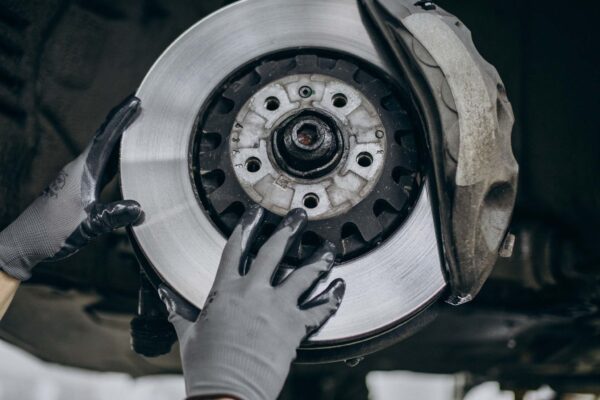
On the vast majority of modern vehicles, braking works on a simple principle. When you press the pedal, the brake calipers clamp the pads against the discs, which are attached to the wheels. This friction slows the rotation of the wheels and therefore the vehicle. The pads wear down with every braking action – that is their job. The discs wear down too, but more slowly. Both components are consumables that require regular replacement, independently of other servicing.
Some older or lighter vehicles are still fitted with a drum brake at the rear, which works differently but follows a similar wear logic.
The 5 warning signs you should not ignore
- Whistling or squealing every time you brake: the metal wear indicator is rubbing against the disc – replace urgently.
- Vibrations in the pedal or steering wheel when braking: the disc is warped or worn unevenly.
- The vehicle pulls to one side when braking: asymmetric wear between the two sides.
- A spongy pedal that sinks deeper than before: brake fluid to be checked or a caliper problem.
- Brake pad wear warning light on the dashboard: electronic indicator calling for immediate replacement.
The 2 mm rule
Once the friction material reaches 2 mm in thickness, replacement is recommended. Below that, the metal rubs directly against the disc – triple the damage and dangerously reduced braking.
Similar articles

Brake pads and discs: when should you replace them?
Votre voiture ne démarre pas? Identifiez la panne en 5 minutes

Diagnostic automobile: tout comprendre avant de passer en garage

Brake pads and discs: when should you replace them?